Maternal sleep deprivation is often portrayed as a “normal” part of motherhood—a challenging phase, certainly, but one assumed to be temporary. In reality, however, many women experience an exhaustion that goes far beyond just a few rough nights.
Beneath this fatigue often lie months—sometimes even years—of fragmented sleep, constant hypervigilance, and an unrelenting mental load.
When the body no longer truly recovers, energy levels drop, emotions intensify, patience wears thin, and a mental fog gradually sets in. Some mothers eventually find they no longer recognize themselves.
Sleep research is clear: a lack of recovery directly affects emotional balance, cognitive abilities, and how the nervous system handles daily stress. For mothers, this fatigue is often compounded by the pressure to “keep going at all costs,” even when the body is sending out warning signals.
There are children who fall asleep quickly, take long naps, or sleep relatively soundly through the night.
And then there are the others: children who still wake up very often, sleep little, need constant presence, or go through phases where their sleep becomes extremely unstable. Sometimes this is due to medical factors such as gastroesophageal reflux (GER), which affects between 45% and 65% of infants. That’s a significant number!
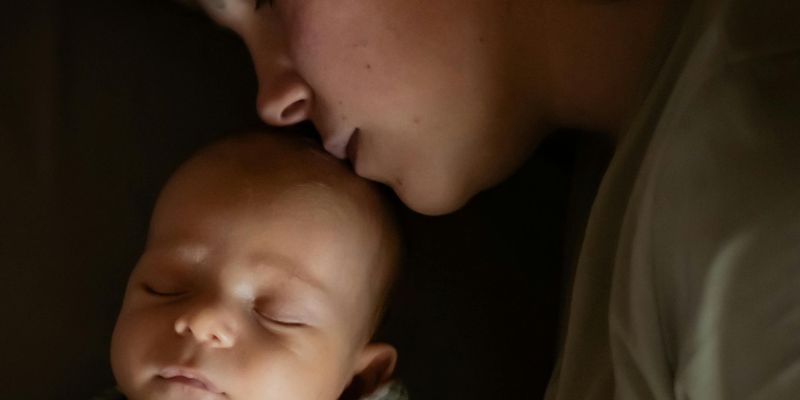
This difference profoundly alters the daily lives of parents, and mothers in particular.
When sleep deprivation accumulates over months or even years, the nervous system inevitably becomes overwhelmed. Irritability rises, the ability to concentrate declines, emotional regulation becomes more difficult, and the body remains in a state of near-constant high alert.
Many mothers then feel guilty about losing their patience more quickly, feeling emotionally fragile, or no longer being able to “hold it together” as they once did. Yet, what their brains and bodies are experiencing is physiologically extremely demanding. Sleep plays a fundamental role in emotional regulation: during the night, the brain recovers, processes information, and helps restore emotional balance. When this recovery is interrupted too frequently, everything naturally becomes more difficult.
And that is precisely why it is important to avoid directives like “try this method” or “you should do that.” Many parents have already tried a great many things. After hearing so much conflicting advice, some mothers even end up feeling responsible for their child’s sleep struggles—even though a child’s sleep is constantly evolving in step with their neurological development. A child is not expected to sleep perfectly from the very first months, nor to “sleep through the night” right away.
Separation anxiety, growth spurts, language acquisition, the first big emotions… Each stage can disrupt sleep. For many children, sleep patterns do not truly stabilize until they are between three and five years old.
Knowing this doesn’t eliminate the fatigue, but it often helps to move past the guilt and remember that things change—even when the nights seem endless.
Sleep deprivation never comes in isolation. For many mothers, it compounds a constant mental load that keeps the brain in a state of perpetual activity: keeping track of appointments, anticipating children’s needs, managing the household, handling family emotions, working, answering messages, keeping up with the news… Even during those rare moments of downtime, the brain often keeps running in the background.
This explains why some mothers can sleep for a few hours without feeling truly rested. Added to this is an overload of constant digital stimulation—social media, notifications, anxiety-inducing news, the pressure to “do it right”… The nervous system remains in a state of near-constant activation, never truly able to settle down.

This need to slow down is particularly palpable during the change of seasons. With the arrival of spring, many women experience a paradoxical feeling: a body still weary from winter, yet an inner urge to start fresh and bring movement back into their daily lives.
Certain approaches—particularly in astrology—associate this period with a significant shift in energy. The transition from Pisces to Aries embodies this very change: moving away from a slower phase focused on introspection and slowing down, and gradually entering a more active, action-oriented dynamic.
Even without a specific interest in astrology, this sensation remains very real. The return of the light directly influences our biological rhythms, energy levels, and mood.
However, for a tired mom, this desire to “start fresh” can also become an added source of pressure.
Many wellness routines featured online require free time, availability, and energy that exhausted moms simply no longer have.
The real challenge lies in finding realistic “micro-moments” of recovery that fit into an already packed daily schedule.
Taking a short walk outdoors, doing a few gentle yoga or Pilates moves, or simply lying down for ten minutes of mindful breathing to soothing music—these actions may seem simple, but they often allow the nervous system to briefly step out of the state of high alert it has been stuck in for too long.
It is these realistic micro-breaks that, when added up, truly make a difference.
One of the most common challenges for exhausted mothers is the ability to truly listen to themselves.
Many wait until they are completely at their breaking point before accepting that they need help or rest. Yet, the body often sends signals long before that point is reached: recurring migraines, intense irritability, generalized aches and pains, persistent brain fog, or emotional overwhelm.
Listening to oneself might mean taking a day off, asking for backup, cancelling an outing, or agreeing to slow down for a while. It can also mean seeking help from professionals when the burden becomes too heavy to carry alone—such as psychologists, sleep specialists, doctors, osteopaths, or physiotherapists.
In France, we have access to many professionals and resources that can provide real relief in certain situations.
A mother does not have to shoulder everything alone. And letting go is a form of recovery, too!
When nights are particularly difficult, some families choose to sleep together so everyone can get at least some rest. Others decide to stop using methods that are no longer effective at their child’s current stage of development.
Because, ultimately, what matters most is often simple: ensuring everyone can find a bit of rest and a sense of security. A mother’s sleep doesn’t always look like ideal rest. And that is precisely why it is essential to adopt an approach to well-being that is gentler, more realistic, and more respectful of the actual daily lives of families.

Faced with the chronic sleep deprivation and emotional overload experienced by many mothers, the temptation is often to seek a miracle solution—a method, routine, or program that will change everything overnight. Yet the reality is gentler than that. What exhausted mothers need is support tailored to their actual lives, with tools that respect their pace and available energy.
It is precisely with this aim that the “How To Self” programs by How to Spa were created: simple, progressive, and deeply human rituals designed to fit into an already busy daily routine—in just 10 minutes a day.

The *Mama Éveil* and *Mama Boost* guides from How to Spa are simple tools designed to help moms gradually reclaim some inner space, recovery time, and breathing room amidst their already packed days.
*Mama Boost* is for moms who need an immediate lift—those who lack the energy or time to commit to a lengthy program but feel that something needs to change, right now.
*Mama Éveil* gently guides you toward reconnecting with yourself, helping you get to know yourself better, recognize your own warning signs, regulate your emotions with greater gentleness, and find an inner serenity that doesn’t hinge on perfect nights of sleep or the ups and downs of daily life. Realistic and adaptable, it fits into your schedule with 10-minute sessions, several times a week, at your own pace.
A mom’s sleep deprivation isn’t always resolved overnight. But every small step taken for yourself, every minute reclaimed, and every moment of quiet offered to your nervous system makes a difference.