Baby-boomer, Millennial, or Gen Z moms: how each generation of mothers has transformed motherhood.

We have the degree. The job. The kids. We read books on attachment, follow gentle parenting accounts, and are mindful of how we speak to our children.

And yet, at the end of the day, there is that fatigue one cannot quite name. A profound fatigue. The fatigue of a mother—regardless of her generation—who gives everything and has forgotten to save a little something for herself.

If you recognize yourself in these lines, it’s likely because you are a millennial mom. And what you are experiencing has a name, a context, and—above all—an explanation.

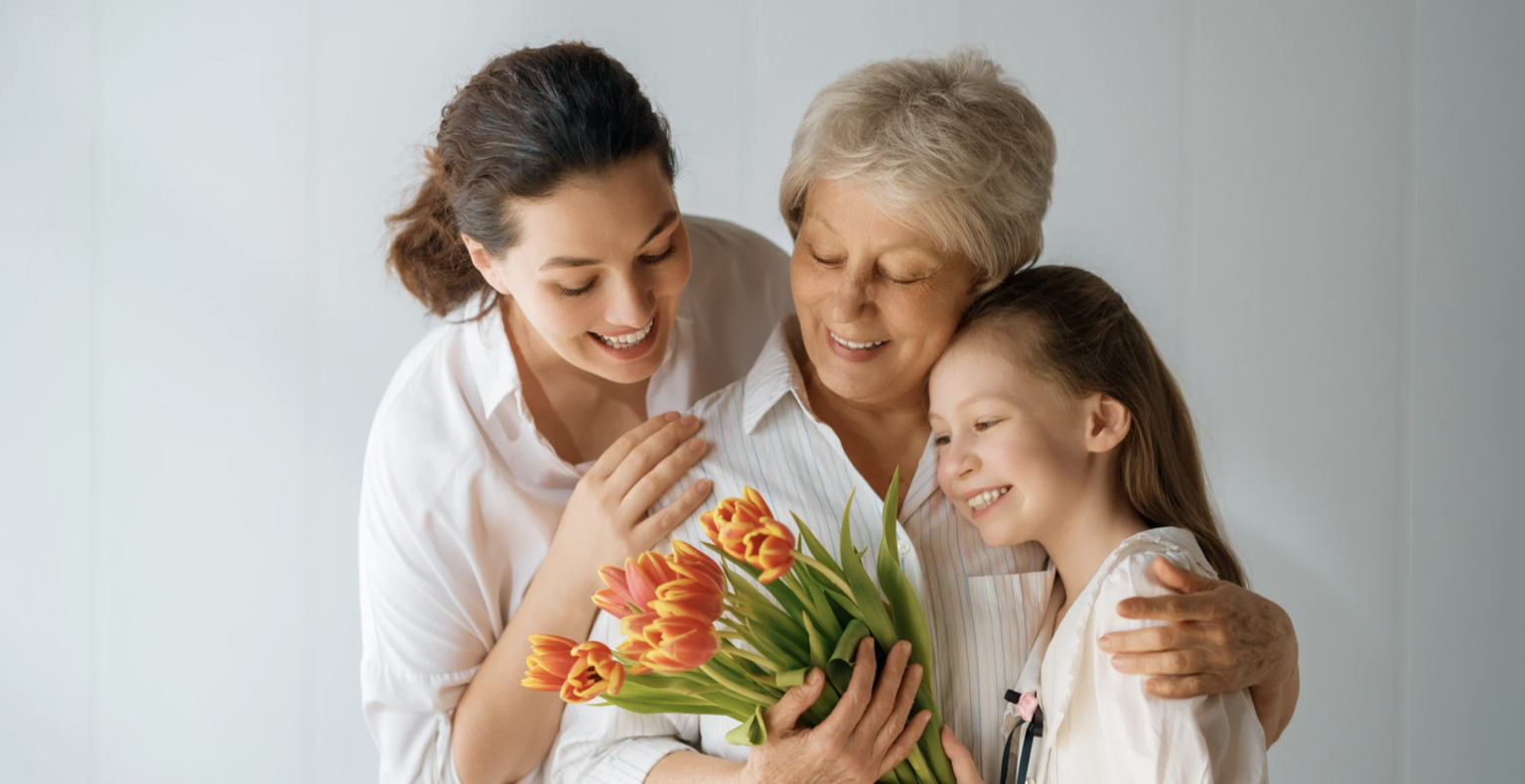
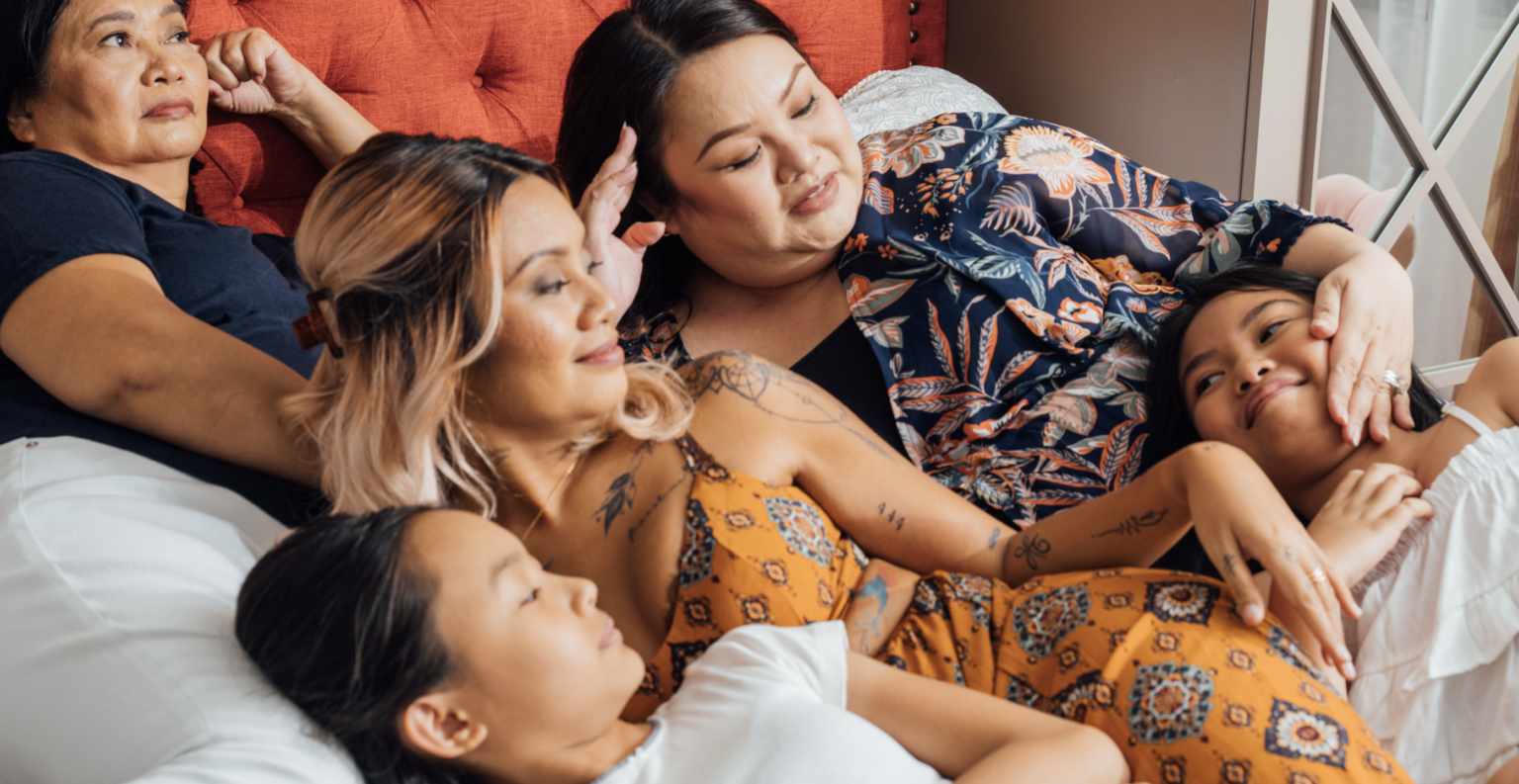
But to truly understand where we stand, we need to look further. Three generations of mothers—Baby Boomers, Millennials, and Gen Z—each of whom has transformed motherhood in her own way.
 

Heritage: where we come from

Baby-boomer moms: the ones who broke what they could.

Baby boomers born between 1946 and 1964 became mothers between the 1970s and 1990s. The context was radically different from ours: mental health was an absolute taboo, children’s emotions were not a priority in child-rearing, and parental authority was unquestionable.

But here is what is often forgotten: many Baby Boomer mothers grew up in even harsher conditions. The Cold War, post-war reconstruction, normalized violence in child-rearing, and a complete lack of psychological support systems. Their own parents adhered to codes of conduct with a rigidity we can only imagine.

And yet, many of them consciously or intuitively decided to do things differently—driven by a quiet determination not to repeat certain patterns, and without the tools we have today at their disposal.

It is this invisible work—done without language, without community, and without validation—that made what we do today possible. Baby-boomer moms laid the foundation stones. We are continuing to build.

What they passed on—often without realizing it—was permission to want something better, even without knowing how.
What science says about the invisible legacy

Epigenetics research now shows that intense stress experienced by one generation leaves measurable biological traces in the nervous systems of subsequent generations, without them having chosen it (Yehuda et al., 2016, Biological Psychiatry).

In other words: we inherit not only our mother’s physical traits, but also what she didn’t have the chance to leave behind somewhere.

Our parents broke what they could, with what they had. We don’t erase their work; we carry it forward.

The present: who we are and what we carry

Millennial moms: conscious, informed, exhausted

Millennials are people born between 1981 and 1996. They grew up alongside the rise of the internet, lived through the 2008 financial crisis and the COVID-19 pandemic—experiencing the advent of the internet just as they were coming of age—and became mothers in a rapidly changing world.

The millennial mom is the one who:

  • Pursued extensive education (74% hold a higher education degree, compared to 35% of their mothers. Pew Research Center, 2023)
  • Worked hard to prove their professional worth
  • I discovered child psychology, trauma, and secure attachment—often on my own, through Instagram or podcasts. #MeToo… voices are finally being heard, and we have access to numerous personal accounts on social media.
  • Raising their children with an awareness that previous generations simply didn’t have the tools to possess.

And that is precisely where the paradox lies: the more she knows, the more she carries. The more aware she is, the heavier the burden.

The balancing act of daily life

Raising children consciously, deconstructing one’s own patterns, and rejecting ordinary educational violence—this represents a large-scale cultural break. But this work comes at a cost.

According to an IFOP / April Foundation study (2022), 67% of mothers describe a state of invisible chronic exhaustion. And one in three waits more than two years before speaking to anyone about it.

The millennial mom validates her children’s emotions while stifling her own—something she has been doing since 10 a.m. She tells them, “It’s okay to be sad,” yet she suppresses her own feelings. This vast gap between what we pass on and what we experience internally is one of the least acknowledged sources of exhaustion in modern motherhood.

The paradox of the exhausted millennial mom

More awareness + less structural support = systemic burnout.

We know what we should do. We know what cortisol does to a child’s brain. We know what attachment trauma is. We know we should set boundaries, take time for ourselves, and regulate our nervous systems.

And we also know that it’s 7 p.m., dinner isn’t made, the monthly report is due tomorrow, and the last time we took some time for ourselves was… we can’t even remember.

Neuroscience is clear on this point: an overloaded nervous system cannot be regulated by sheer willpower (Porges, *The Polyvagal Theory*, 2011). The body needs concrete signals of safety.
The future: what is changing with Gen Z

Gen Z moms: born with the tools

Generation Z, born between 1997 and 2012, is starting to have children. And their approach to motherhood is already different in several fundamental ways.

The approach to information. The millennial mom discovered conscious parenting along the way—often after already having children—and had to unlearn ingrained habits. The Gen Z mom, on the other hand, grew up with these concepts; secure attachment, emotional regulation, and positive discipline are notions she is familiar with before she even has children.

Attitudes toward mental health: For Millennials, seeing a therapist was often still viewed as a sign of weakness. Gen Z has normalized therapy as a tool for personal growth, on par with exercise or nutrition. Gen Z moms approach motherhood with greater emotional resilience already in place and feel less guilt about asking for help.

The relationship between work and identity. Millennials grew up with the message that “you can have it all.” They often internalized the idea that if they didn’t succeed, it was because they weren’t trying hard enough. Gen Z is more pragmatic. From the outset, they question structures, working hours, family models, and the division of tasks. They refuse self-sacrifice as an implicit condition of motherhood.

The relationship with social media: Millennials experienced motherhood under the social media spotlight—facing pressures to be the “perfect mom,” polished photos, and the demand for high-performance parenting. Gen Z, having grown up with social media, takes a more detached view; they value raw authenticity, unfiltered stories, candid accounts, and the open embrace of imperfections.

What the three generations have in common

Despite all these differences, Baby Boomers, Millennials, and Gen Z share a deep aspiration: not to pass on the painful things they themselves received. To break the cycles. To raise children free from certain burdens.

It is this common thread that runs through generations and gradually changes the way we form a family.
The good news in all this is that it can change.

Research on nervous system regulation shows that five minutes of mindful practice are enough to lower cortisol levels by 23%.

What millennial moms—and tomorrow, Gen Z moms—need is not to do more, but to reclaim space for themselves through simple practices that can be integrated into a daily life that isn’t going to slow down.

We continue the journey together.

Baby boomer, millennial, or Gen Z: every generation of mothers did what they could with what they had. Baby boomers broke down barriers where they could, even without the words. Millennials put words to what the baby boomers had started. Gen Z arrives with the tools already in hand.

It is a gradual, imperfect, sometimes painful, yet real transmission.

And if you reach the end of this article feeling a little less alone in all of this, that is exactly why it was written!
Moms and sleep deprivation: regaining your well-being

Maternal sleep deprivation is often portrayed as a “normal” part of motherhood—a challenging phase, certainly, but one assumed to be temporary. In reality, however, many women experience an exhaustion that goes far beyond just a few rough nights.

Beneath this fatigue often lie months—sometimes even years—of fragmented sleep, constant hypervigilance, and an unrelenting mental load.

When the body no longer truly recovers, energy levels drop, emotions intensify, patience wears thin, and a mental fog gradually sets in. Some mothers eventually find they no longer recognize themselves.

Sleep research is clear: a lack of recovery directly affects emotional balance, cognitive abilities, and how the nervous system handles daily stress. For mothers, this fatigue is often compounded by the pressure to “keep going at all costs,” even when the body is sending out warning signals.

Not all maternity experiences are alike: when sleep deprivation changes the experience of motherhood.

There are children who fall asleep quickly, take long naps, or sleep relatively soundly through the night.

And then there are the others: children who still wake up very often, sleep little, need constant presence, or go through phases where their sleep becomes extremely unstable. Sometimes this is due to medical factors such as gastroesophageal reflux (GER), which affects between 45% and 65% of infants. That’s a significant number!

This difference profoundly alters the daily lives of parents, and mothers in particular.

When sleep deprivation accumulates over months or even years, the nervous system inevitably becomes overwhelmed. Irritability rises, the ability to concentrate declines, emotional regulation becomes more difficult, and the body remains in a state of near-constant high alert.

Many mothers then feel guilty about losing their patience more quickly, feeling emotionally fragile, or no longer being able to “hold it together” as they once did. Yet, what their brains and bodies are experiencing is physiologically extremely demanding. Sleep plays a fundamental role in emotional regulation: during the night, the brain recovers, processes information, and helps restore emotional balance. When this recovery is interrupted too frequently, everything naturally becomes more difficult.

And that is precisely why it is important to avoid directives like “try this method” or “you should do that.” Many parents have already tried a great many things. After hearing so much conflicting advice, some mothers even end up feeling responsible for their child’s sleep struggles—even though a child’s sleep is constantly evolving in step with their neurological development. A child is not expected to sleep perfectly from the very first months, nor to “sleep through the night” right away.

Separation anxiety, growth spurts, language acquisition, the first big emotions… Each stage can disrupt sleep. For many children, sleep patterns do not truly stabilize until they are between three and five years old.

Knowing this doesn’t eliminate the fatigue, but it often helps to move past the guilt and remember that things change—even when the nights seem endless.

Mental load and hyper-connectivity: why a mom’s brain no longer truly recovers

Sleep deprivation never comes in isolation. For many mothers, it compounds a constant mental load that keeps the brain in a state of perpetual activity: keeping track of appointments, anticipating children’s needs, managing the household, handling family emotions, working, answering messages, keeping up with the news… Even during those rare moments of downtime, the brain often keeps running in the background.

This explains why some mothers can sleep for a few hours without feeling truly rested. Added to this is an overload of constant digital stimulation—social media, notifications, anxiety-inducing news, the pressure to “do it right”… The nervous system remains in a state of near-constant activation, never truly able to settle down.

This need to slow down is particularly palpable during the change of seasons. With the arrival of spring, many women experience a paradoxical feeling: a body still weary from winter, yet an inner urge to start fresh and bring movement back into their daily lives.

Certain approaches—particularly in astrology—associate this period with a significant shift in energy. The transition from Pisces to Aries embodies this very change: moving away from a slower phase focused on introspection and slowing down, and gradually entering a more active, action-oriented dynamic.

Even without a specific interest in astrology, this sensation remains very real. The return of the light directly influences our biological rhythms, energy levels, and mood.

However, for a tired mom, this desire to “start fresh” can also become an added source of pressure.

Many wellness routines featured online require free time, availability, and energy that exhausted moms simply no longer have.

The real challenge lies in finding realistic “micro-moments” of recovery that fit into an already packed daily schedule.

Taking a short walk outdoors, doing a few gentle yoga or Pilates moves, or simply lying down for ten minutes of mindful breathing to soothing music—these actions may seem simple, but they often allow the nervous system to briefly step out of the state of high alert it has been stuck in for too long.

It is these realistic micro-breaks that, when added up, truly make a difference.

Listen to your body, dare to ask for help, and accept slowing down.

One of the most common challenges for exhausted mothers is the ability to truly listen to themselves.

Many wait until they are completely at their breaking point before accepting that they need help or rest. Yet, the body often sends signals long before that point is reached: recurring migraines, intense irritability, generalized aches and pains, persistent brain fog, or emotional overwhelm.

Listening to oneself might mean taking a day off, asking for backup, cancelling an outing, or agreeing to slow down for a while. It can also mean seeking help from professionals when the burden becomes too heavy to carry alone—such as psychologists, sleep specialists, doctors, osteopaths, or physiotherapists.

In France, we have access to many professionals and resources that can provide real relief in certain situations.

A mother does not have to shoulder everything alone. And letting go is a form of recovery, too!

When nights are particularly difficult, some families choose to sleep together so everyone can get at least some rest. Others decide to stop using methods that are no longer effective at their child’s current stage of development.

Because, ultimately, what matters most is often simple: ensuring everyone can find a bit of rest and a sense of security. A mother’s sleep doesn’t always look like ideal rest. And that is precisely why it is essential to adopt an approach to well-being that is gentler, more realistic, and more respectful of the actual daily lives of families.

Tools designed for exhausted moms

Faced with the chronic sleep deprivation and emotional overload experienced by many mothers, the temptation is often to seek a miracle solution—a method, routine, or program that will change everything overnight. Yet the reality is gentler than that. What exhausted mothers need is support tailored to their actual lives, with tools that respect their pace and available energy.

It is precisely with this aim that the “How To Self” programs by How to Spa were created: simple, progressive, and deeply human rituals designed to fit into an already busy daily routine—in just 10 minutes a day.

The *Mama Éveil* and *Mama Boost* guides from How to Spa are simple tools designed to help moms gradually reclaim some inner space, recovery time, and breathing room amidst their already packed days.

*Mama Boost* is for moms who need an immediate lift—those who lack the energy or time to commit to a lengthy program but feel that something needs to change, right now.

*Mama Éveil* gently guides you toward reconnecting with yourself, helping you get to know yourself better, recognize your own warning signs, regulate your emotions with greater gentleness, and find an inner serenity that doesn’t hinge on perfect nights of sleep or the ups and downs of daily life. Realistic and adaptable, it fits into your schedule with 10-minute sessions, several times a week, at your own pace.

A mom’s sleep deprivation isn’t always resolved overnight. But every small step taken for yourself, every minute reclaimed, and every moment of quiet offered to your nervous system makes a difference.

The Art of Slowing Down: Your Cozy Guide to Autumn

Autumn is a pivotal time: the light softens, the days grow shorter, and our bodies naturally crave a different rhythm.

This season invites a return to the essentials—less bustle, more gentleness; less distraction, more presence. It offers a different kind of well-being than the lively energy of summer: the art of slowing down, and all the cozy comfort that goes with it!

In this article, we explore how to slow down without guilt, how to restore daily well-being even when time is short, and how How to Spa can help you find lasting harmony between your body, mind, and energy.

Three simple steps:

  1. Understanding what your body is telling you.
  2. Recreate your inner cocoon.
  3. Transform slowness into energy healing.

1. When your body sends you signals to slow down

As the colder seasons set in, the body becomes more reactive: light sleep, fluctuating mood, temperamental digestion, and deeper fatigue. A general slowing down.

These signals are, above all, messages. They indicate that your body is trying to shift from a rhythm of action to a rhythm of recovery. It is in these tiny moments that true relaxation begins.

  • “How to Spa” tip: pay attention to the time of day when your body “speaks” to you. Is it first thing in the morning? After lunch? When everything winds down in the evening? Simply identifying your peak moment of fatigue means giving your body the space it needs.

At How to Spa, you learn to listen to these signals rather than ignore them. A simple centering gesture can be enough to start this inner dialogue.

In our wellness guides, we invite moms to place their hands on their bellies before starting the day. Three slow breaths, reconnecting with the body, a minute of silence before facing the hustle and bustle.

2. Recreating your inner autumn cocoon

Slowing down is something you build. Consequently, for many women, this inner cocoon does not resemble a spa weekend, but rather moments of respite woven into everyday reality.

Creating your own sanctuary means transforming your daily life into a space where you can breathe:
softer light, a soothing scent, screen-free time, and mindful body care.

With autumn, the body slows down almost without us noticing. This need to withdraw and seek warmth arises naturally, intuitively. It is an ancient memory, a form of gentle hibernation ingrained within us.

  • “How to Spa” tip: Before going to bed, dim the lights thirty minutes early and write down three things from your day that you want to let go of. This helps your nervous system unwind before sleep.

Plus, to recreate your interior, we also offer suitable products in our online shop. You can discover them > here <.

In Mama Éveil, you learn to transform your evening routine into a soothing ritual: a carefully prepared herbal tea, a touch of oil on your temples, slow breathing.
The action then becomes an anchor—a signal to your mind that it can let go of the pressure.

3. Transform slowness into energy healing.

Slowness, when chosen, rebalances your energy.

It is a form of inner hygiene: it regulates the mind, harmonizes the breath, and restores warmth where it is lacking. By slowing down, you restore coherence to your natural rhythms: your breath regains its depth, your nervous system relaxes, and your mind stops racing ahead.

This slowing down has an immediate effect on the body.
The heart beats more slowly, breathing deepens, and warmth returns to the extremities. Indeed, these are signs that energy is circulating once more—that it is ceasing to accumulate in the head and is flowing back down into the body.

In short, it is also a matter of retraining one’s relationship with time: learning to move away from constant reactivity and toward presence.
Every action becomes conscious again: drinking, walking, breathing, massaging, listening.

In this slowness, you can feel your energy stabilize, your mind clear, and your sensitivity sharpen. It thus becomes a daily practice—almost invisible, yet one that transforms the way you experience things.

  • “How to Spa” tip: try performing an everyday action—washing your face, making tea, getting dressed—at half your usual speed. Notice how your body feels: often, a sense of calm sets in before the action is even finished.

You can also try a pleasant self-massage from our tutorials, created by spa experts: https://youtu.be/TZPEhOY66X0?feature=shared

Slowing down means learning to be present to what already exists.
To recognize what your body is telling you, to leave space between movements, to transform automatic actions into conscious rituals.

So, this autumn, you simply need to listen to yourself more, lighten what weighs you down, and let slowness become your most precious form of self-care.

With How to Spa, every moment of your daily life can become a rejuvenating break.
A space where you breathe, where you sense, and where you return to your own center.

Discover our wellness programs here:

Mama Awakening

Mama Boost

I’d like it to be a vacation for me, too.

How can you regain your serenity when you’re an exhausted mom?

Summer is often portrayed as a time for rest, relaxation, and reconnection. Yet for many mothers, this image does not reflect reality.
Between managing the children, organizing daily life, handling travel, and meeting everyone’s expectations, the holidays become an additional mental load.

Many women experience this period with a dull fatigue, a sense of being overwhelmed, and an inner frustration that is hard to put into words: “I wish it were a vacation for me, too.

If this resonates with you, know that you aren’t alone—and, above all, that solutions exist.
In this article, we explain why you feel this exhaustion despite having taken a break, what your body is telling you through this fatigue, and how to regain a sense of calm using simple tools designed to fit into your daily life as a mom.

When Vacations Become an Invisible Mental Load

I wish this were a vacation for me, too.
Many moms feel this sentiment deeply. Some admit it hesitantly; others don’t even dare to put it into words.

For behind the idealized image of summer vacation—relaxation, reconnecting with family—lies a very different reality for many women: mental overload, logistical demands, disrupted routines, overexcited children… And, in the background, the feeling of having to shoulder it all without ever catching a breath.

Instead of resting, some moms emerge from the summer more exhausted than they were at the start.
Their minds are overloaded. Their bodies are running on autopilot. And their need for personal space is constantly being pushed aside.

Why you’re exhausted despite the holidays (and what your body is trying to tell you)

You might have thought the holidays would “do you good,” but you find yourself more tired than before. Why? Because physical rest isn’t always mental rest.

When you remain constantly on alert—even on the beach, even with family—your nervous system never switches off. You anticipate, you monitor, you organize, you manage other people’s emotions… And your brain—it never rests.

This state of constant hypervigilance, even in the absence of visible stress, eventually exhausts the body. This is what is known as deep-seated fatigue—the kind that cannot be resolved by a simple nap.

And there is something else:
Most moms experience a form of mild dissociation during the holidays.
They are present, yet disconnected from themselves. They live for the group, fading into the background a little more each day, hoping that a moment of calm will come “later.”

The result: fatigue builds up. Irritation mounts. Morale plummets. And a sense of loneliness sets in—even when surrounded by others.

How to Spa tip : simply bringing your attention back to your body—your breathing, a point of tension, a sensation of warmth—can break that automatic cycle. Each time you do this, you “remind” your brain that you exist independently of others.

Mama Boost and Mama Éveil: two programs to help you (truly) catch your breath.

Because we know that moms have neither the time, the space, nor sometimes the energy to follow complex routines, we have created two programs that respect your pace:

Mama Éveil : to regain a sense of calm, create moments of breathing space in your daily routine, and reconnect with yourself using spa-inspired techniques. Ideal if you’re feeling overworked, tense, or on edge.

Mama Boost: to revitalize your physical and emotional energy when you feel drained and depleted.
A more energizing program, designed for moms who are at the end of their rope.

Each program is designed to be followed from home, at your own pace—no equipment, no pressure.
These are practical, guided breathing exercises rooted in reality— not vague instructions to “take care of yourself” without knowing how.

How to Spa Tip: You can start by picking just one moment in the day (in the morning before everyone else is up, or in the evening after your shower) to listen to a module, practice self-massage, or simply breathe. Even 5 minutes of focused practice can transform your inner state.

You have the right to be tired. You have the right to need help. And above all, you have the right not to lose sight of yourself in the whirlwind of summer.

Vacations shouldn’t mean mental overload.
What if, this year, you made them a time to reconnect with yourself—gently, sincerely, and at your own pace?

Discover our programs here:

Mama Éveil

Mama Boost

How to Spa: Guiding moms toward serenity—a long-standing mission.

In a fast-paced world where mothers must juggle professional, family, and personal responsibilities, one thing always ends up in short supply: time for oneself. We say this often—in our Instagram posts and our articles. We aren’t necessarily talking about devoting hours to yourself, or heading off to a silent retreat on the other side of the world. Just a few minutes. A breath. A space to reconnect with yourself.

How to Spa was born from this lived, felt, and shared reality.
It began with a desire to share simple tools for slowing down and practicing daily self-care, through tutorials and a curated selection of products.
Today, it has evolved into a brand, a source of guidance, and a nurturing haven that helps mothers find serenity—and, more than ever, offers tangible support to exhausted moms.

1. The Origins of How To SPA – A Personal and Universal Need

  • A founder, burnout, a realization

At the heart of the project is Maud Ganry Boutaric, a cosmetic engineer by training. After several years in the industry, she experienced burnout. This abrupt turning point became a transformation.
Maud realized that to continue creating, loving, and living fully, one must first take care of oneself.
She decided to dedicate her expertise, sensitivity, knowledge, and intuition to a greater project.

  • The intuition of a gentle and accessible approach to support

Maud quickly trained as a spa manager. She enriched her practice with professional techniques while remaining true to a core idea:
Well-being shouldn’t be a rare interlude, but a constant thread running through everyday life.
She begins sharing her advice, tips, and rituals. How to Spa becomes a website, a world, a promise:

that of regaining inner calm, wherever you are—at home, at work, or traveling.

2. Why provide support specifically to mothers?

  • One observation: maternal exhaustion is taboo.

Through interactions with her community, one thing becomes clear: the women most disconnected from themselves are often… mothers. Those who give everything, all the time. Those who dare not admit they have reached their limit. Those who feel guilty at the very thought of taking a breather.

The mental load, the expectation of constant availability, and the social pressure to be perfect—all of this creates an atmosphere of perpetual tension, an invisible social pressure.
Yet, the solutions proposed within the wellness world often fail to address this reality.

  • Une réponse pensée pour elles : réaliste, douce et sans culpabilité

That is where How to Spa decides to go a step further.
Not with yet another personal development program, nor a rigid routine to follow to the letter.
But with short, flexible formats that free you from guilt.
With the simple idea that self-care shouldn’t be a chore, but a way of coming home to yourself.

And so, two guides were born: Mama Boost and Mama Éveil—two paths to reconnecting with oneself, designed to fit into a mom’s real life.

Especially since Maud is a mother herself, and knows exactly what mothers can sometimes feel. And for even greater expertise, she is trained in meditation, Pranayama, and somatic practices.

3. Two wellness guides to help you catch your breath, depending on your needs.

  • Mama Boost: a week to regain your energy

Designed as a first step, Mama Boost offers a one-week guided program for women overwhelmed by the mental load—women who feel they are at their breaking point.
They no longer have the time, the space, or sometimes even the desire. What they need is a turning point, a chance to decompress, without any heavy commitment.

Mama Boost offers seven simple practices that take just 10 minutes a day. These practices are not mandatory; they can even be spread out over several weeks if desired. The goal is to incorporate moments of well-being without pressure—moments that truly resonate with the individual.
The program includes breathing exercises, spa-inspired techniques, and opportunities for introspection.
The objective: to reconnect with oneself—free from pressure—and lay the foundation for rebuilding balance.

  • Mama Éveil: one month to establish lasting habits

For those wishing to delve deeper into this dynamic, Mama Éveil guides you for a month.
The idea is not to impose a strict framework, but to help each woman build her own wellness routine at her own pace.

With or without personalized support, Mama Éveil offers practical tools: videos, audio recordings, and handy guides—and, above all, 40 practices to choose from based on your needs at the moment.
A month to pause, listen to yourself, and rediscover the woman behind the mother.

An extended version, Mama Éveil Déclic, stretches the support over four months to allow for deeper, more transformative foundational work.

Since its inception, How to Spa has never been just a simple wellness shop.
Behind every program, product, kit, and tutorial lies the same driving purpose:
to help women reconnect with themselves—without judgment, comparison, or guilt.

The programs are not there to add yet another task to an already overloaded to-do list, but to create space. A breath. A possibility.

And that is undoubtedly what makes this project so deeply human. It is not about attaining an ideal of perfect serenity, but about relearning how to breathe—here and now.

Taking care of yourself when you are a mother is a necessity. And it is often the starting point for finding meaning in your family life.

By creating How to Spa, Maud opens up a space of gentleness and attentive listening.
A place where self-care becomes possible again, even on the busiest days.

Because a mom who is aligned, at peace, and truly heard… means a family that breathes easier.

Spring: an ideal season to reconnect with well-being, self-care, and the spa spirit.

Spring is a time of natural renewal, ideal for gently reconnecting with oneself. After the winter months, both body and mind crave a transition toward more light, movement, and lightness.

In this article, we explore how to adapt your wellness and spa rituals to the needs of spring, so you can care for yourself with gentleness and mindfulness.

1. Why is spring a key season for well-being?

Spring symbolizes renewal. It is a season of energetic transition that directly influences our vitality levels, mood, sleep, and even our digestion.

What the body needs in the spring:

  • Eating a Lighter Diet
  • Boost Your Vital Energy
  • Eliminate toxins that have built up over the winter
  • Recreating Movement
  • Regulate Sleep with Light
  • Reconnecting with the Outside World

Taking care of yourself in the spring isn’t just about doing a trendy “detox.” It’s more about listening to your body’s needs and adopting simple yet powerful habits.

How to Spa Tips: Start each morning with a detoxifying herbal tea made from nettle, rosemary, or dandelion (sacred plants). This will help you naturally boost your body’s energy.

Spring and Well-Being

2. Clean—but not just your house

The famous “spring cleaning” isn’t just about the closets. What if we expanded our cleaning to the inside of ourselves?

A warm bath infused with purifying herbs or essential oils—such as white sage, rosemary, or lavender—can cleanse both your energy and your skin. Slow breathing, a gentle self-massage, or a releasing mudra (such as the Apana Mudra) can help release emotional tension that has built up over the winter.

How to Spa Tip: Run a bath with rosemary tea, add 2 drops of lavender essential oil, and play a music playlist (see our latest Instagram post). Stay in silence, visualizing yourself letting go of what no longer belongs to you. If you only have a shower, you can diffuse the essential oils in a diffuser or a bowl of hot water. After your shower, enjoy some post-bath oils to prolong the pleasure.

3. Recognize the signs that your energy is opening up to a new cycle

The body knows before the mind does. It whispers subtle messages when energy begins to shift.

In the spring, you may experience:

  • A desire to move, to get the body moving again
  • A need to sort, organize, and declutter your space
  • Emotions that well up, sometimes for no apparent reason
  • A deeper sleep… or a more restless one, with dreams that make you wonder
  • Hypersensitivity to light, sounds, and energy

These aren’t coincidences. They’re signs that your energy is opening up to a new cycle.

How to Spa Tip: Every morning, ask yourself a simple question: How am I feeling today? Write down the answer without judging it. Doing this regularly helps you stay in tune with your own rhythm.


4. Treat yourself to a gentle refresh

This spring, there’s no need to reinvent everything. Sometimes all it takes is a quiet moment, a tender gesture, or a comforting scent. Self-care, when enjoyed without pressure, becomes a refuge.

How to Spa is here to support you this season with: relaxation tutorials to help you refocus; relaxation kits tailored to any situation; and carefully selected products to complement your routine and help you unwind.

How to Spa Tip: Choose a ritual that makes you feel good. A cup of herbal tea, a massage once a week. What matters is consistency, not perfection.


5. Connecting with Living Things

Nature doesn’t pretend. It grows, it sings, it expresses itself. Reconnecting with living things means reconnecting with what heals us deeply.

Walking barefoot in the grass. Listening to the birds. Drinking lemon thyme tea. Observing the lunar cycles. It also means drawing inspiration from the sacred rituals of plants: lighting some palo santo, placing a stone (such as amethyst) on your heart, or connecting with a totem animal that inspires you.

How to Spa Tip: Create a mini-ritual to connect with nature: observe your surroundings, and choose an animal that symbolizes the moment. Then, let yourself be carried away by some meditative music from your favorite playlist.

What if spring weren’t just a season experienced outdoors, but an inner journey?
A subtle transition in which the body, soul, and energy seek to realign—not to do more, but to be better, more authentic, and more alive.

Pranayama: The Art of Breathing for Deep Well-Being

Breathing is a natural, often automatic act to which we pay little attention. Yet breathing plays a fundamental role in our physical and mental well-being. Shallow breathing can increase stress and fatigue, while conscious, controlled breathing improves concentration, promotes relaxation, and optimizes our vital energy.

This is where pranayama comes in—a yoga practice that aims to control the breath in order to better channel inner energy. This article takes an in-depth look at the importance of breathing in daily life, the benefits of pranayama, its various techniques, and how to effectively incorporate it into your wellness routine. Finally, we’ll share a simple, accessible exercise so you can get started right away and enjoy its benefits.

1. The Importance of Breathing in Everyday Life

Breathing is a natural and vital process that we perform unconsciously. However, it has a profound impact on our physical and mental well-being. Deep, conscious breathing helps calm the nervous system, improve concentration, and ensure the body receives adequate oxygen. Unfortunately, stress and modern lifestyles often cause us to breathe shallowly, thereby limiting our ability to fully relax.

Paradoxically, when we feel stressed, anxious, or afraid, we can quickly find ourselves short of breath and feel the need to breathe faster.

What if it were about breathing better rather than breathing “more”?

How to Spa Tip: Take a moment each morning to observe your breathing and slow down your breathing rate, to better understand your body and how it works.

2. What is Pranayama?

Pranayama is an ancient practice rooted in yoga that consists of breathing techniques designed to regulate the flow of vital energy (“prana”) in the body. In Sanskrit, “prana” means vital energy, and “yama” translates to control or regulation. Today, this discipline is recognized for its benefits in reducing stress, improving concentration, and strengthening the immune system. Incorporating pranayama into your daily routine can transform your overall well-being in just a few minutes a day.

How to Spa Tip: For a quick wellness break, incorporate a breathing exercise into your morning routine or before a relaxation session. Light a scented candle and practice mindful breathing to create a sense of calm.

3. The Benefits of Pranayama

The conscious, controlled breathing of pranayama helps reduce stress and anxiety by activating the parasympathetic nervous system, which promotes a state of deep relaxation. It improves sleep quality by calming the mind, thereby optimizing the ability to fall asleep and promoting restorative sleep. By increasing oxygenation of the brain, it promotes concentration and mental clarity. In addition, it strengthens the respiratory system by improving lung capacity and promoting better gas exchange. Finally, controlled breathing helps distribute energy evenly throughout the body.

As you can see, Prayanama has nothing but benefits. It’s all connected!

4. A simple pranayama exercise for beginners

There are many types of pranayama. In total, there are about thirty distinct types of pranayama, including their variations.

We recommend a simple pranayama exercise to get you started, which you can practice at home: Bahaya Pranayama, an external breath-retention technique.

Unlike Anulom Pranayama, in which you hold your breath after inhaling to calm the mind, Bahaya Pranayama involves holding your breath after exhaling. This practice is particularly beneficial for energizing the body and boosting lung capacity while increasing energy levels.

Exercise Procedure:

  1. Posture: Make sure you’re in a comfortable position, such as sitting or in the lotus position. Place a cushion under your buttocks and move closer to the edge. Your knees should be lower than your hips, which reduces strain on your lower back and allows you to hold the pose longer. Keep your back straight and your shoulders relaxed.
  2. Breathing: Take a deep breath in through your nose, filling your lungs with air slowly and deeply, counting to 4.
  3. Exhalation: Exhale slowly, emptying your lungs completely, while counting to 8.
  4. Holding Your Breath After Exhaling: Once you have exhaled, hold your breath while keeping your lungs empty. Hold your breath for 8 seconds, depending on your comfort level.

Repeat the exercise 5 to 10 times.

Good to know: Breathe from your abdomen (your abdomen expands as you inhale and contracts as you exhale).

This exercise helps you develop a mechanism that improves the distribution of oxygen throughout your body.

The Benefits:

  • Increases lung capacity: By holding your breath after exhaling, you work on increasing your lung capacity.
  • Energy Boost: This pranayama activates the energy system and revitalizes the body.
  • Strengthens the mind: Like any pranayama practice, it promotes concentration and can have a calming effect after several repetitions.

It balances the nervous system, calms the mind, and promotes deep, harmonious breathing.

How to Spa Tip: Start with short holds and gradually increase the duration as you feel more comfortable. Practice this exercise in a quiet place free from distractions to maximize its benefits.

This exercise is especially recommended for those looking to increase their energy, improve their lung health, and boost their overall well-being.

Pranayama will be part of our wellness support programs, which will launch in the spring of 2025, in addition to our relaxation tutorials created by spa experts. These are designed to help you find time for yourself, no matter how busy your schedule may be.

Whether you’re a beginner or an advanced practitioner, pranayama is a gateway to deep well-being. There are various techniques tailored to each person’s specific needs. Incorporating pranayama into your daily routine will help you regain balance and serenity. Take a few minutes today to try these exercises and experience their immediate benefits!

Social Media and Mental Health: Finding Your Balance

Social media plays an ever-present role in our lives, exposing us daily to a flood of information, images, and notifications. While it connects us to others, it can also cause stress, anxiety, and a constant sense of comparison. Disconnecting, then, becomes essential to preserving our mental well-being. But how can we actually do that?

1. Grounding in oneself and one’s body: an effective solution

  • Stimulating the Senses to Return to the Present Moment

Grounding is a technique that helps bring your attention back to the present moment and reconnect with your body on a deep level. When you feel swept up in the constant stream of social media, it’s essential to refocus on yourself. Stimulating the senses plays a key role in this process.

Our five senses are valuable allies in helping us refocus and calm our inner turmoil. Incorporating them into wellness rituals can transform simple everyday moments into times of deep reconnection.

  • Sense of smell: Fill your home with a pleasant scent. Whether it’s a room fragrance, a candle with soothing notes, or a few drops of essential oil, these scents create an atmosphere that promotes relaxation.
  • Taste: Make yourself a comforting drink, such as tea, herbal tea, or hot chocolate. Take the time to savor it mindfully, enjoying every sip.
  • The View: Create a serene and soothing space around you. A warm decor featuring plants, soft textures, and subdued lighting helps draw your gaze to elements that inspire serenity.
  • Hearing: Play soft music or natural sounds, such as the sound of waves or the wind in the trees. These sounds have a calming effect on the mind.
  • Touch: Wrap yourself in a soft blanket, feel the softness of a fabric, or treat yourself to a self-massage with a relaxing oil.

How to Spa Tip: Combine these practices into a complete ritual. Light a scented candle, get comfortable, enjoy a hot cup of herbal tea, and let yourself be carried away by soothing music. These simple steps allow you to fully ground yourself in the present moment while recharging your batteries.

  • Self-massage: A Wellness Ritual to Release Tension

Touch is an excellent way to reconnect with your body. Who doesn’t love it when someone gives us a massage? In fact, self-massage promotes muscle relaxation and stimulates blood circulation. By gently massaging your temples, the back of your neck, or your hands with a soothing oil, you release built-up tension and calm your mind. These simple gestures help you disconnect from the hustle and bustle of the digital world and refocus on your inner well-being.

How to Spa Tip: You can try one of our tutorials, created by spa experts. For example, our at-home pampering tutorial. We recommend pairing this self-massage with one of our facial oils.

2. The Power of the Present Moment and Contemplation

Practicing mindfulness is a powerful way to slow down and fully appreciate our surroundings. In a fast-paced world, taking the time to observe and feel is an act of self-compassionate resistance.

When you feel overwhelmed, treat yourself to a screen-free break. Sit down for a few moments, take a deep breath, and observe what’s happening around you. Maybe a bird singing, the wind rustling the leaves, or simply the light dancing on a wall. These small moments, which we often overlook, remind us of what truly matters and help us rediscover a sense of inner peace.

CULTIVATE A SENSE OF WONDER!

We previously discussed wonder in a video. Cultivating wonder in our daily lives can transform our perception of the world and bring more joy and lightness to our minds. Learning to see the beauty in simple things helps us ground ourselves in the present moment and develop sincere gratitude.

How to Spa Tip: Try to look at your surroundings with fresh eyes: the way a raindrop slides down a leaf, the smell of fresh bread in the early morning, or even a spontaneous smile from a stranger. These details, though often seemingly insignificant, can become true sources of peace and happiness.

3. Journaling: Putting Your Thoughts Down on Paper to Better Understand Yourself

In the face of the mental overload caused by social media, intuitive writing or journaling is a valuable method for organizing your thoughts and putting things into perspective. Keeping a journal where you write down your feelings, concerns, or simply the highlights of your day allows you to step back and bring more clarity to your mind.


How to Spa Tip: If you feel overwhelmed after spending a long time on social media, take a few minutes to write down how you’re feeling. Ask yourself questions like, “How did I feel while scrolling through social media today?” or “What content inspired me, and what made me doubt myself?” Putting these thoughts down on paper helps you better understand your emotions and avoid the negative impact of social media.

DID YOU KNOW?

At How to Spa, we’ve created free tutorials to help you explore the benefits of sensory stimulation. Discover how to incorporate these techniques into your daily life to treat yourself to a truly relaxing moment of reconnection. Take advantage of our remaining wellness kits, which are also designed to support this process and offer you an immersive experience of letting go.

Take this time for yourself and discover how a simple break can transform your mental and physical well-being.

STAY TUNED for more wellness tips and experiences!

Switch Chapters: The Awakening—How To Spa

There comes a time in life when we feel a gentle thrill: the thrill of a new beginning. An opportunity to take a fresh look at what has been—not to erase it, but to honor it while opening the door to what might be.

Turning the page to a new chapter is never a trivial decision. It involves acknowledging what no longer fulfills us and listening to that little inner voice that whispers that change is necessary. It’s not always comfortable, because it pushes us to step outside our familiar routines (see our previous article). But it is in this transition from one phase to another that the true essence of awakening and growth lies.

1. The signs that encourage us to grow

Switch Chapters: The Awakening—How To Spa

The comfort zone is a space where we feel safe, a place where our actions are familiar and our values are in balance. Contrary to what we often hear, it is not a bad thing. In fact, it is essential.

Life is full of signs that show us it’s time for a change. But we still need to know how to recognize them. Among them:

  • An unexpected opportunity: An offer, an encounter, or an event that seems to come out of nowhere but piques your curiosity. These opportunities are often gateways to a new beginning.
  • A routine that has become a burden: What you used to do out of habit is starting to bore you or no longer satisfy you. It could be a job, a relationship, or even a way of life.
  • Inspiring encounters: Some people come into our lives to open our eyes to other possibilities. They offer a new perspective that encourages us to think differently.
  • A persistent intuition: That little inner voice that tells you a change is needed. It’s often subtle, but it never completely goes away.

These signs are not insignificant. They invite us to take a step back and listen to what our hearts and minds are trying to tell us.


Switch Chapters: The Awakening—How To Spa

2. Listening to Your Intuition: A Guide to Renewal

Turning the page to a new chapter means, above all, listening to yourself. It means taking the time to reconnect with your deepest desires and values. It can be difficult at times in a fast-paced world, but our intuition already knows what’s best for us. It’s that silent guide that pushes us forward, even when we have doubts.

It’s not about denying the past. Every chapter that came before has its place and has helped shape who we are today. But embracing a new beginning also means giving ourselves the chance to write a story that’s more in line with our current aspirations.

How to Spa Tip: Ask yourself the right questions:

  • Am I really happy with my current situation?
  • What still brings me joy?
  • What dreams or plans have I put on hold?

These answers provide valuable clues to understanding what you need. Listening to your intuition also means accepting that growth is an integral part of life.

3. Turning Intuition into Action

Once we’ve identified this need for change, the next key step is to take action. This might be a bold decision, such as a new project, a move, or a career change. But it could also involve small adjustments: a new routine, a different way of thinking, or even simply taking a step back.


Our intuition plays a vital role here: it guides us toward what is good for us, even when doubts and fears hold us back.
http://preprod.howtospa.com/?attachment_id=32444

Every step, no matter how small, brings us closer to this new version of ourselves.

How to Spa Tip: You can rethink your routine to include activities that nourish you mentally and emotionally. It can be as simple as starting a meditation practice or setting aside time for yourself each week. You can also try our tutorials, such as the “At-Home Spa Cocooning” video tutorial—available for free starting at the end of this year—which is designed to guide you every step of the way.

Why not explore new opportunities to try new things, even if they seem small or insignificant at first? Sometimes, a simple decision can pave the way for bigger changes.

Changer de chapitre, c’est accepter qu’il y aura des moments de doute. Mais c’est dans ces moments que vous apprendrez le plus sur vous-même.

4. The Rise of How to Spa

A Message from the Founder, Maud:

“At How To Spa, this realization came naturally. After eight years of supporting you in your wellness rituals, I felt the call to evolve and reinvent the way we support you. 2024, like for many, was a trying year—both professionally and personally—marked by challenges and exhaustion. But I see every challenge in life as a blessing in disguise. Because through these difficult moments, these doubts and misunderstandings, life gently leads us to face what needs to be changed.

For me, it meant slowing down as the year came to a close, despite the pressure to meet revenue targets. It was a powerful period of self-reflection, following a period of exhaustion, that finally gave me the courage to turn the page and embrace that inner voice that has been calling to me for several years now—to create tools even more aligned with a deep spirituality. It meant finding the confidence to share even more about myself, in order to help you on your journey toward spiritual awakening.

Starting in 2025, I’m embarking on a new chapter, guided by a more comprehensive vision of well-being. While our Relaxation Kits marked a significant milestone in the history of How To Spa, they will now give way to support programs designed to meet your current needs. With the help of practices such as Pranayama Yoga breathing (a pioneer in breathwork), Guided Meditation, and Somatic Practices to regulate the nervous system—practices in which I am currently training—my goal will be to guide you through a wellness ritual that combines a love of the spa with spiritual awakening.

I want to offer you something more specialized than just wellness coaching (which, it must be said, is starting to saturate the market ^^). These programs will be aimed at a very specific audience—one that will identify with a focus on preventing mental and physical burnout. I don’t want to reveal too much just yet, since I’m currently in the midst of market research and training, but what I can tell you is that these programs will serve as a catalyst to help you regain confidence in yourself and in life. You’ll finally take the time to care for yourself and your mental well-being, with support tailored to your schedule to make the practice as realistic as possible. You won’t be overwhelmed by a list of exercises to do, but rather by a support system designed to ensure your schedule incorporates these practices.

I have so much more to share with you in 2025!
Stay tuned”

How do you know if it’s time to step out of your comfort zone? Is this the right time?

We often hear this phrase: “You have to step out of your comfort zone!”

As if staying in this personal space were synonymous with failure or with stagnation. However, the reality is much more nuanced. Stepping out of one’s comfort zone is neither an obligation, nor an end goal. The real challenge is learning to listen to yourself so you can know when it is wise to step out of it… and when it is better to stay.

1. The comfort zone: an ally, not an enemy


The comfort zone is a space where we feel safe, a place where our actions are familiar and our values find balance. Contrary to what we often hear, it is not a negative thing. In fact, it is essential for recharging, finding stability, and establishing a foothold in a world that is constantly changing.

Staying there can be a conscious and beneficial decision. When life throws us off balance or when uncertainty is already omnipresent, staying in that space can be a way to take care of and to protect one’s well-being.

When you’re feeling vulnerable, for example, or going through a rough patch, it might be a sign that you shouldn’t step outside your comfort zone just yet. Everything in its own time.


2. Stepping Out of Your Comfort Zone: The Right Time

There’s no hard-and-fast rule for stepping outside your comfort zone, but certain feelings can help you determine whether it’s the right time to explore something new or to make a change. For example

  • A mix of fear and excitement: If a situation makes you afraid but also stirs a curiosity or a sense of enthusiasm, it may be a sign that you are ready.
  • A feeling of stagnation: If you feel like you’re going around in circles or that something is missing, it might be time to explore new possibilities.
  • A Call for Change: Do you feel a deep desire to grow or to discover something new? Follow that feeling.

On the other hand, if stepping outside your comfort zone feels forced or exhausting, it might be best to stay within that zone for now.

It’s essential to listen to your emotions and your body. They are like compasses that guide you toward what’s right for you, right here and now.

How to Spa Tip: Ask yourself the right questions: “Am I ready to face the consequences of this change?”, “Do I have a solid foundation to keep me secure in case of difficulties?”, “Is this decision aligned with my values and needs?”

3. Learn to strike a balance between comfort and pushing your limits


The key, then, is balance. Staying in your comfort zone isn’t a problem in and of itself, as long as it provides you with what you need. Stepping outside of it doesn’t mean giving up what makes you feel good. It’s possible—and even recommended—to hold on to the things that give you a sense of security. It’s by striking a balance between exploration and stability that you’ll be able to move forward with peace of mind.

Moments of calm and reflection—such as those you might experience in a spa setting—are ideal for this kind of self-reflection. By treating yourself to moments of well-being, you reconnect with your needs and can better identify your priorities.

How to Spa Tip: With our self-massage tutorials and our relaxation kits, created by spa experts and designed to help you find your center, you can recreate the soothing atmosphere of a spa right at home. This way, you can take the time to listen to yourself, find a balance between comfort and pushing your limits, and refocus before making an important decision.

Stepping outside your comfort zone—or staying within it—is not a decision to be taken lightly. The right time depends on you, your feelings, and your needs. What matters is creating an environment that allows you to listen to yourself and move forward at your own pace.

Take care of yourself and discover our wellness solutions.

Finding balance is the first step toward lasting well-being.

This site is registered on wpml.org as a development site. Switch to a production site key to remove this banner.