Taking care of your face: facial massage, face exercises, and self-massage
Dear readers,
When we talk about facial care, we usually think of cleansing and moisturizing. Sometimes we include exfoliation and/or a face mask. But did you know that you can take care of your face in ways that go far beyond these routine treatments?
In fact, the wellness industry offers effective and increasingly recognized methods to give your face a stunning new glow—all while providing total relaxation!
Experts with magic fingers, whose techniques go beyond a simple facial treatment
While the skincare for the face has well-known properties that are widely recognized, such as purification, cleansing, hydration, or even anti-aging, there are some highly specialized techniques to help you restore your radiance, reduce the appearance of wrinkles, and achieve a “plumpy” effect.
- The Expert Facial Massage, with the renowned facialist Delphine Langlois
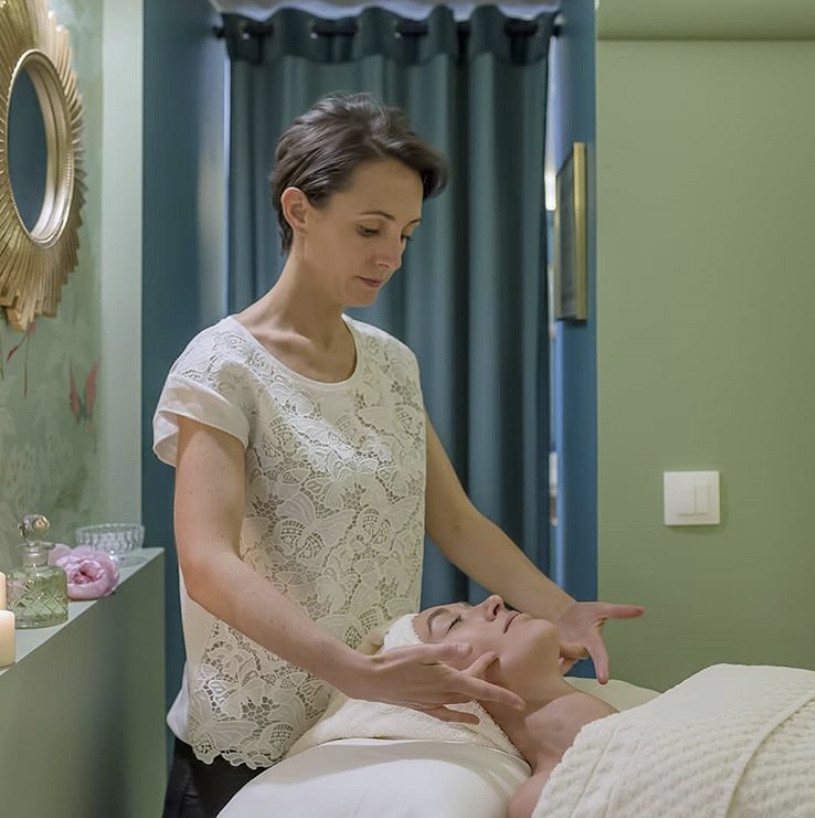
Delphine is the quintessential French skincare expert. After 13 years of creating skincare treatments at the heart of the prestigious George V Spa in Paris, Delphine trained with experts from all a15> world wide to learn specific and recognized techniques. Anti-aging facial massage, Jacquet® pinching, the Kobido® by Master Shogo Moshizuki from Japan or also the Oral Massage® by Dr. Yakov Gershkovich, are just some of the skills she acquires.
Passionate about beauty and well-being, Delphine offers extensive expertise in natural facelifts, combined with a range of sophisticated massages for a rejuvenating and tailored effect.
Many celebrities seek out his services, as do men and women looking for a unique treatment tailored to the shape of their face.
To learn more: https://www.delphinelanglois.com
- Face Gym, or Facial Workout, with the pioneer in the field: Inge Theron
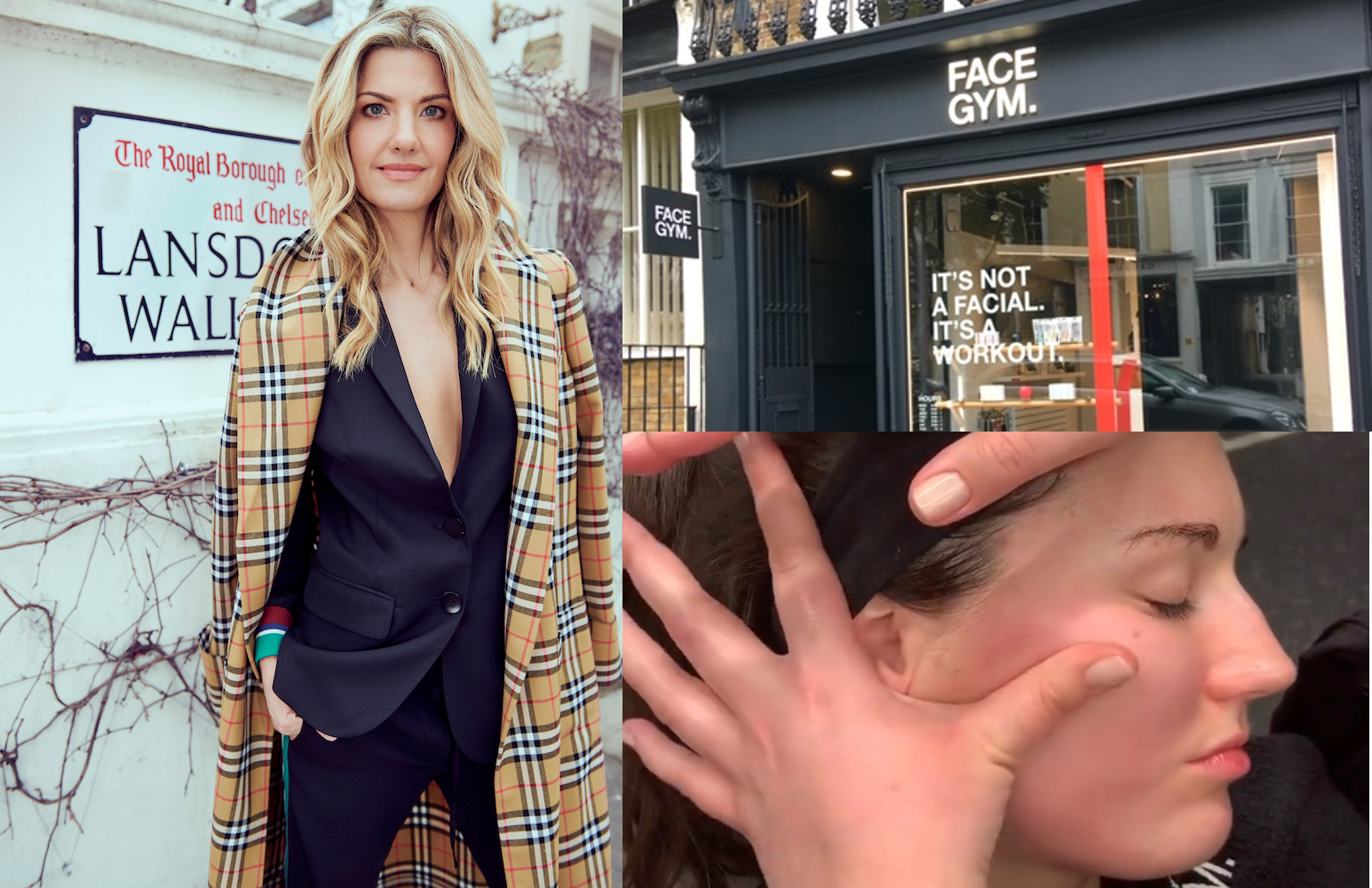
The FaceGym brand was founded in 2016 by Inge Theron, a British woman.
A trip to India and six months of globetrotting around the world gave her a deeper appreciation for the benefits of massage and spa treatments. She became an expert in recommending spas around the world and wrote a column for the Financial Times titled “Chronicles of a Spa Junkie.”
Unfortunately, over the next three years, Inge became obsessed with cosmetic injections, constantly trying to eliminate even the slightest wrinkle… until she underwent one procedure too many at age 37, which left her face disfigured. During a stay at an ashram in Mexico City, Inge received ancient Inca facial treatments several times a day to “restore” her facial structure. There, she learned that you can tone and sculpt the muscles of your face just as much as those in the rest of your body.
The idea of developing a unique “workout” technique for the face was born. It’s like a gym session for your face, with a warm-up, cardio, massage, and relaxation. The results are amazing—plump, hydrated skin!
With more than a dozen studios around the world (London, New York, and Los Angeles), success is guaranteed with famous clients such as Ellie Goulding and Adriana Lima.
To learn more: https://www.instagram.com/facegym/?hl=fr
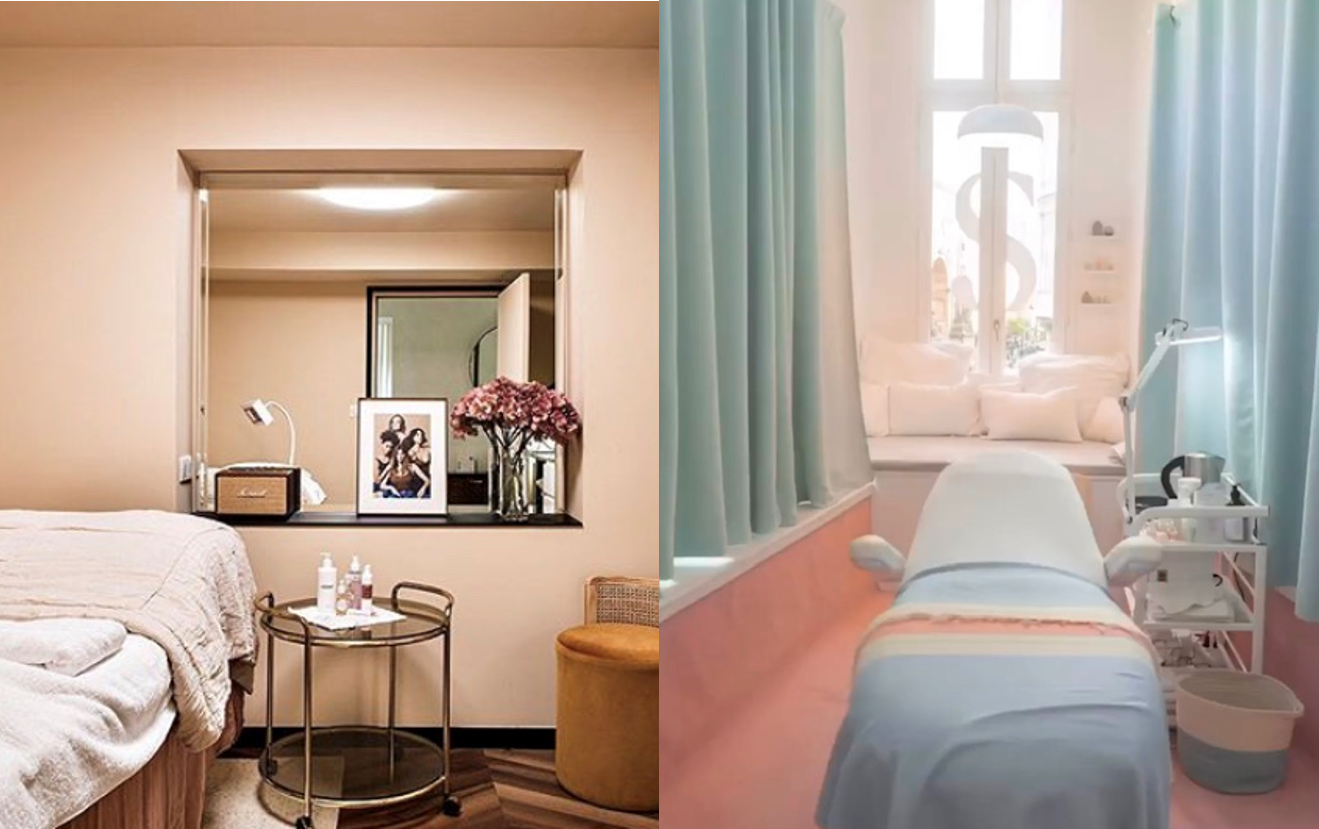 Unique on the market, these techniques will inspire many to launch their own “Glow” Studios, following the lead of new Parisian brands such as Aime and Seasonly
Aime – Glow Studio: https://aime.co/fr/content/12-le-glow-studio
Seasonly – Skin Studio: https://seasonly.fr/pages/skin-studio
Self-Massage
Practiced for centuries in Japan and the Middle East, self-massage is a facial care technique that promotes well-being and has an immediate effect on the skin’s radiance. It is recommended by all wellness experts.
In addition to helping your daily skincare product penetrate the skin more effectively, facial self-massage relieves tension (around the eyes, temples, and jawline) and stimulates microcirculation in the blood and lymphatic systems for an immediate radiant glow.
By learning to perform self-massage, you get to know your body better and learn to love yourself more. You gain a better understanding of the signs of aging, allowing you to age gracefully using non-invasive manual techniques.
- How To Spa Self-Massage: a technique by Fabienne Crocq
 Want to try some simple and effective self-massage techniques? Check out our online tutorials and videos, created in collaboration with our spa expert Fabienne Crocq
Tutorials in booklets free to read here: http://preprod.howtospa.com/creez-votre-relaxation/
Free video tutorials on facial makeup—try them here: http://preprod.howtospa.com/faites-votre-spa-a-la-maison-en-video/
Expert Interview: Aziza, HER DIY and organic beauty secrets
Thank you for granting us this interview. It is with pleasure thatwe wanted to share your passion for skin care. In order to share your knowledge, you have written two books full of natural recipes for creating these cosmetics: “Recipes fresh for my skin ” and “A Journey to the Land of Berber Beauty .”
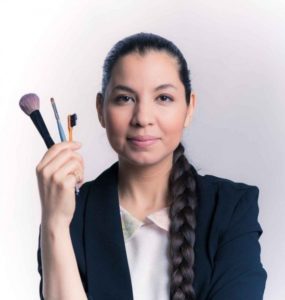
1. Can you tell us a little more about yourself and your background?
I studied aesthetics and specialized in Ayurvedic massage. I was fortunate enough to work for two years at the Cinq mondes spa, and then I trained in professional makeup.
Today, I’ve been a makeup artist in the fashion industry for over 15 years.
2. Your two books, *Fresh Recipes for My Skin* and *A Journey to the Land of Berber Beauty*, are invaluable guides for making your own cosmetics in a simple way using natural ingredients that are accessible to everyone. What inspired you to share your knowledge?
These days, women are taking better and better care of their bodies and their skin. At the same time, they want to use non-toxic products.
I’ve always been drawn to natural products. When I do a client’s makeup, they often ask me, “What skincare products can I use on my skin?” That’s what inspired me to share these natural recipes.

3. Spotlight on “Fresh Recipes for My Skin”: makeup remover, face masks, scrubs, balms, shower gel, and even deodorant and toothpaste—you offer a wide variety of recipes for cosmetics and personal care products made from fruits, vegetables, tea, coffee, citrus fruits, and more. Our favorite: the anti-aging date mask. It’s so easy to make and smells so good! How did you manage to put together such a comprehensive list of beauty recipes?
I’ve been using these beauty recipes my whole life, because it’s a tradition in our families that’s been passed down from generation to generation. When I was little, my mom would make hair treatments for me using argan oil and henna. For the date mask, I used my mother’s recipe. We also often share recipes with our cousins, friends, aunts, and so on. In Morocco, we’re lucky to have natural ingredients readily available and at a low cost.
For all these reasons, over time, I’ve been able to collect all these recipes.
4. Spotlight on “Journey to the Land of Berber Beauty.” A true gem that brings together the beauty secrets of Berber women and Morocco. Rasshoul, henna, argan, dates… it’s a wonderful experience for our senses! You even share a recipe for making your own kohl.
Do you have any recommendations or websites where we can find these more specific ingredients?
I get my supplies directly from an herbalist in Morocco. But here, you can find the ingredients at Middle Eastern stores, and some of them at organic stores.
5. The naturalness of products and waste reduction are issues that are becoming increasingly important to consumers. Your books are valuable resources for those looking to take their eco-friendly consumption to the next level. As a professional makeup artist yourself, you’re striving to go further by offering more organic and natural makeup to your clients. Do you have any brands you’d recommend?
• Six Senses : http://www.sixsenses.com/spas/rue-de-casti- glione-paris
In my work as a professional makeup artist, I use a lot of organic products and various brands, such as: Pur Aloe, Couleur Caramel, Avril, Absolution, Alima Pure, Kosas, Boho, ilia, Dr. Hauschka, Miss W, Lady Green, and Lily Lolo.
To learn more about Aziza El Badaoui and her work: http://www.azizamakeup.com/
An Interview with Aurélie, a Massage Therapist at Shangri-La
Dear readers,
Have you ever wondered who is behind these golden hands that make you feel so much good? We’re talking of course about the massage therapists, also known as spa practitioners who bring you happiness when you spend a moment of well-being at a spa.
Since its creation, How To Spa has been collaborating with the experts in this field, and it is with pleasure that we present to you an interview with Aurélie, a massage therapist at the Chi-Le Spa at the Parisian Shangri-La hotel.
Hello Aurélie, and thank you for your welcome.
You are currently a massage therapist at the Shangri-La Spa. How did you end up in such a beautiful setting?
With passion, patience, and the good fortune of having previously worked with Ms. Colette Audebert. She once again placed her trust in me by inviting me to join her team at Le Chi, Le Spa, and giving me the opportunity to work at the most romantic hotel in the capital.
Pouvez-vous nous en dire un peu plus sur votre parcours ?
When I was 15, I caught the bug of wanting to bring well-being to others, in my own small way.
In 9th grade, I told my mom, “I want to be a cosmetologist.” She looked at me a little strangely, thinking it was just a phase that would pass with my teenage rebellion.
It has been sixteen years since then, you had to have an excellent application to get into a beauty school. So I repeated my 9th-grade year, so that I could be accepted a year later into the only school of aesthetics in Southern Brittany. But at the last minute, I decided not to go, preferring to start a new school year at a high school with a general curriculum and enroll in the program STT with the “Commercial Action and Communication” track.
Trois ans plus tard, le bac en poche, je rentre à l’école IFOM à Nantes pour 1 an en classe préparatoire au BTS esthétique-cosmétique. Après obtention de mon CAP esthétique-cosmétique, je n’ai pas poursuivi le cursus BTS, car je voulais “MASSER”!!
Ten years ago, the state-recognized CQP Spa Practitioner certification didn’t exist yet. A vocational high school diploma was an option, but it wasn’t right for me. So I found the “Body and Spa” program at the Chantal Le Cozic School in Rennes. This program introduced me to massages and rituals from around the world, as well as to what a spa is and helped me understand this multisensory environment.
This profession offers so many of opportunities thatI wanted to dive right in and experience every aspect of it. So, I worked as a beautician and a beauty consultant at a beauty salon specializing in beauty and perfume salon, or even a brand ambassador for select perfume brands.
I worked as a spa practitioner on a seasonal basis for Cinq Mondes and Clarins. The off-season allowed me to travel and to train in other techniques, such as for example a trip to Bali where I was able to learn the traditional Balinese massage.
I also had the chance to conduct some awareness-raising wellness -well-being among young teenage girls with visual impairments who are visually impaired.
I have been working as a spa therapist in Paris since 2014. I started out at The Peninsula Paris Spa, where I worked for three years and was fortunate enough to also serve as a hands-on trainer, and for the past six months I have been working at Chi, the spa at the Shangri-La Paris Hotel.
Having met many massage therapists, I’ve always been deeply moved by the passion with which they practice their craft. They all share the same goal: to help people feel better. I imagine it’s the same for you. What do you enjoy most about your job?
Yes, that’s right—I love taking care of people. What I enjoy most about my job as a spa therapist is knowing that I’m giving my clients that little extra something that will make their day better—so that they leave feeling much better than when they arrived. This involves wellness and massage, but also conversation. I listen to them without judging them, and I do my best to offer advice so they feel relaxed after their treatment. I enjoy connecting and sharing with my clients. I have a lot of kindness and love to give.
A massage is very demanding, both physically and mentally. We often hear that during a massage session, a genuine exchange of energy takes place, and that it all comes down to the practitioner’s intention. How do you ensure that every client gets the best possible experience throughout your day?
There really is a genuine exchange of energy taking place. With some clients, even before giving them a massage—just as they walk through the door of the treatment room—you can already tell whether it’s going to be pure bliss or, quite the opposite, an energetic nightmare!!
To ensure every client gets the best experience, I never give the same massage twice. I never get bored, even if the appointment schedule lists the same massage. I often tell my clients, “This is your massage. Even though I’m the one giving it, it’s YOURS.” It’s essential to ask our clients about their preferences or how they’d like to feel after their massage. It’s up to me to adapt. So I vary the techniques and movements, or adjust the pressure, while staying true to the original concept of the massage.
On a side note: I give massages without shoes on to feel more grounded. After a massage, I wash not only my hands but also my entire forearm up to the elbow with lukewarm or cool water. I also wear an amber stone that protects me and absorbs negative energy.
At the beginning of a massage, I ask the client to take three deep breaths because that allows me to breathe deeply with them. That way, I remember to breathe while I’m massaging—to really breathe. In fact, massage therapists too often hold their breath while massaging, and I still do that sometimes.
After a massage, while waiting for the client to leave the treatment room, I do a few stretches for my back and arms.
Finally, while it’s not always possible, it’s a good idea to air out the treatment room to refresh the air, clear away any lingering energy, and be ready to start another massage as if the first one hadn’t happened yet.
Throughout your career, you’ve developed in-depth expertise not only in the skin’s cosmetic needs but also in the healthy lifestyle necessary for everyday well-being. Do you have any tips and tricks to share with our readers? Whether it’s a daily routine, a wellness idea, or a great tip.
Breathe!! This has been a real eye-opener for me since I started working in Paris. I didn’t know how to breathe properly. It was a physical therapist—who also has a degree in Chinese medicine—who made me aware of this. Breathing correctly helps reduce stress and anxiety. I also recommend the “RespiRelax+” app, which I use myself. I make it a point to do this every night so I can reconnect with myself. My mantra: our bodies aren’t meant to suffer!
I’m also mindful of what I eat, because what we put into our bodies can affect us both inside and out. These days, it’s hard to know what’s actually good for us on our plates… That’s why I use the “Yuka” app, which “scans” your food to help you eat better and make the right choices.
Finally, I’ve recently become interested in “Face Mapping,” which helps identify the causes of skin imbalances: poor diet, smoking, stress, pollution… I could talk about this passionately for hours! Why not come see me at the spa for a consultation? Otherwise, you can check out Pinterest and find facial “maps” to get started. From now on, whenever you have a pimple, redness, or any kind of skin imbalance, you’ll have a better understanding of why 🙂
What kind of massage would you recommend to our readers?
Facial massage. This small area alone contains about twenty muscles (face and neck). The face is constantly under tension and is the part of our body that is in constant contact with the outside world. Many meridians pass through, begin, or end on the face and skull. This area is therefore connected to the rest of your body and to nearly all your organs. The face also needs to be relaxed, stimulated, and oxygenated. In fact, nine out of ten clients let go and relax during a facial massage. You’ve got to try it right away!
What are your future plans?
At age 30, I went back to school in October. I’m in a work-study program at the Shangri-La Paris Spa and attending the Catherine Sertin School. Next April, I’ll take my Spa Practitioner VAE exam, and in October, I’ll earn my Spa Manager diploma.
My goal is to become an Assistant Spa Manager, then a Spa Manager, and eventually a teacher so I can share all my passion and knowledge about this wonderful profession and all its possibilities with future spa practitioners.
I’d also like to improve my English even more and take up yoga someday…
A big thank you, Aurélie, for this warm interview. We wish you all the best for the future!
Have a wonderful day, everyone!
An Interview with Pauline, Fitness & Yoga Coach
Dear members,
Because we want to help you achieve well-being in your daily life, we invite you to meet Pauline, a fitness coach and yoga instructor who works at top hotel spas such as the Ritz, as well as in clients’ homes. Her background is a reflection of her passion, and her advice will help you lead a healthier lifestyle every day.
“Hello, Pauline,
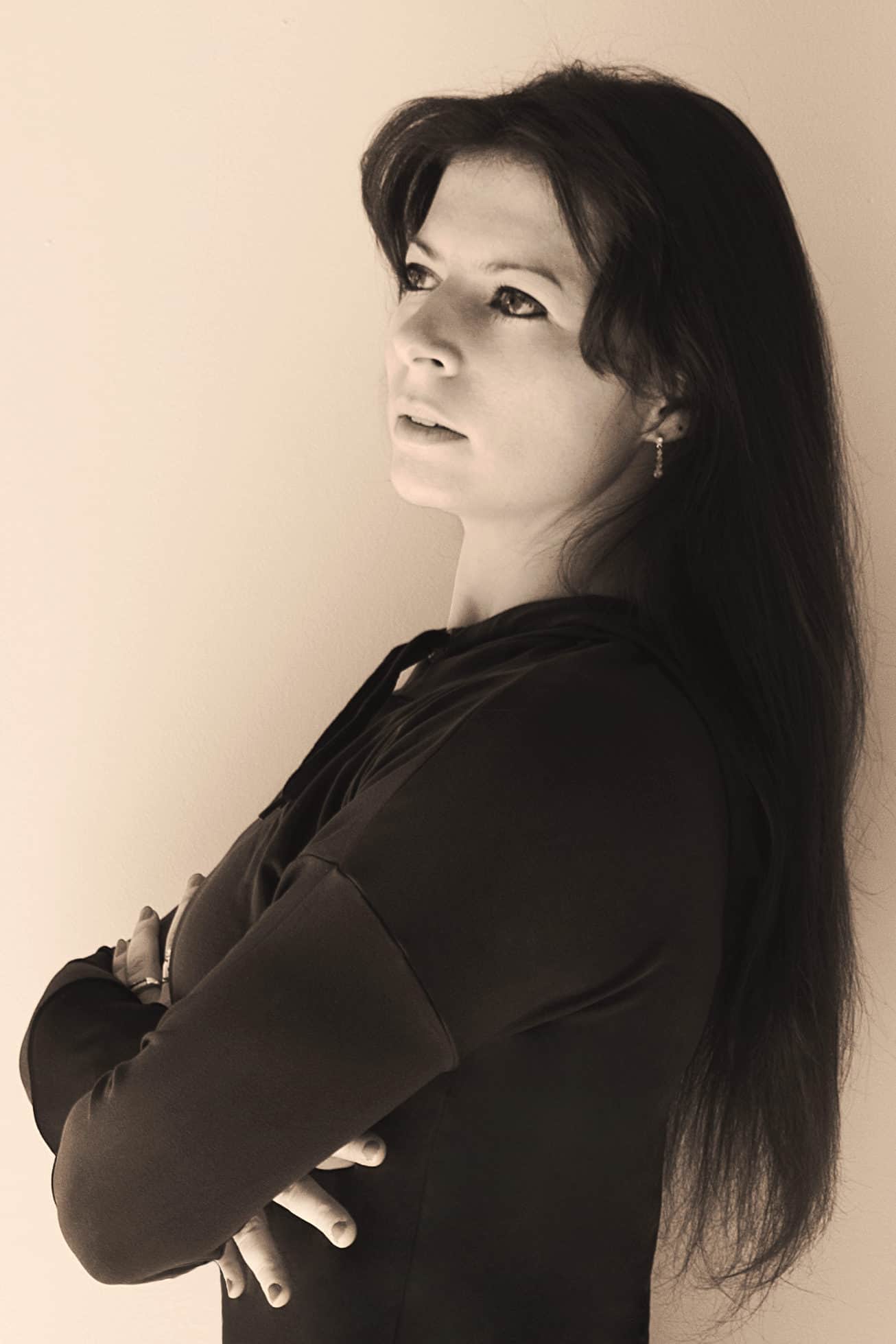
Thank you for welcoming me and for taking the time to do this interview.
How To Spa is always looking to feature experts in the wellness industry. Our readers will be delighted to learn about your passion and read your advice.
Tell us a little more about your background—why did you choose this career?
I’ve been passionate about sports since I was very young, so it was only natural that I chose this career, which emphasizes human interaction.
In 2010, I began offering private coaching to several celebrities at a weight-loss center on the Champs-Élysées. As soon as I earned my fitness certifications, I worked for four years as a fitness instructor at Club Med Gym before devoting myself full-time to in-home coaching. After that, I traveled to India to train in yoga—a truly unique experience!
Building on this experience, I am now thriving at the prestigious Ritz in Paris, thanks to my health-focused yoga classes and customized services.
You’re currently working at a major luxury hotel in Paris. What has this wonderful experience brought you?
It is a true privilege to apply my expertise within a high-end establishment. I am able to put my perfectionist nature to good use in this environment, where the goal is to deliver a one-of-a-kind service. This enriching experience has equipped me with additional skills, including unparalleled expertise in the hospitality industry.
What services do you offer at home?
I offer a wide range of services in the form of classes for individuals or small groups, indoors and or outdoors.
Specifically, strength training using small equipment (TRX, boxing, dumbbells, resistance bands, etc.), “cardio” workouts, and any yoga exercises that help improve posture, balance, flexibility, and joint mobility.
The goal is to listen, guide, support, motivate, and adapt to each person’s level—whether men, women, children, seniors, couples, etc. During a trial session, I assess the participant’s level through simple physical tests before developing a personalized program tailored to their needs.
Let’s take a quick look at yoga. What are its benefits? Also, you had the opportunity to train with some of the greatest teachers in India. Tell us about your experience there.
Yoga, an ancient practice, is becoming increasingly popular; it offers numerous benefits for both the body and the mind. I was drawn to the therapeutic aspect of this discipline. After suffering several injuries due to excessive sports training, I felt it was essential to find a complementary activity described as “restorative and preventive.” I knew right away that India, the birthplace of yoga, was the ideal destination to fully immerse myself in an authentic learning experience. I was determined to study under Gérard Arnaud, a pioneer of Vinyasa Yoga and a leading authority in France. My thirst for learning allowed me to gain as much knowledge and experience as possible. I was able to share this knowledge as soon as I returned by creating my own group classes.
Do you have any advice for our readers? To feel better physically and mentally, what kinds of exercises can people do? When and how? How often do you recommend doing them?
I’d say that everyone needs to find their own balance. I often come across people who exercise out of a sense of obligation. Start by finding an activity that suits you so you can treat it as a hobby rather than a chore.
Then, the key is to adopt a healthy lifestyle—it’s a virtuous cycle!
Mix it up according to your schedule: Strength training + cardio + yoga, three times a week, is a healthy foundation.
Personalized guidance from a professional helps optimize your results and prevent injuries.
Whether it’s in a gym, outdoors, at home, alone or with friends, whatever your age may be, don’t hesitate—get moving! Take the time for your health and pay attention to the signs from your body: always prioritize safe practices, yes, it’s important!
Thank you to all our readers, and thank you to How to Spa for this wonderful collaboration.
See you soon!
Pauline, Sports Coach “
To learn more about his work: https://www.youtube.com/watch?v=XkWLc5dPd7U
Contact her to schedule a private lesson or a session at your spa: pauline.coach@hotmail.com or at +33 (0) 6 62 37 82 16
The interview of the month
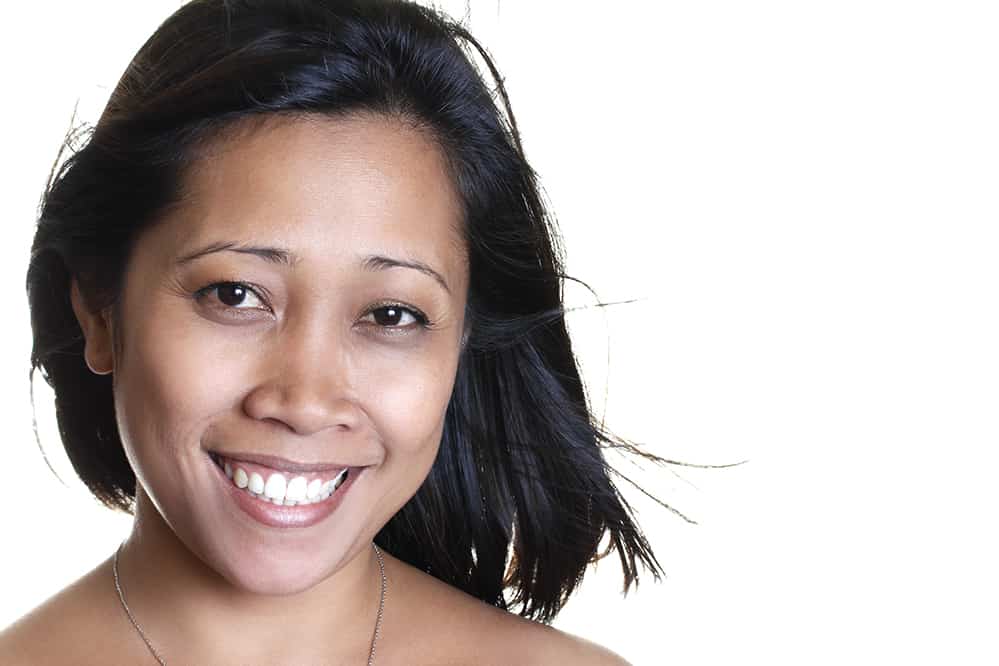 Ruth Indiathi, founder of the “Balinese Village” Balinese
Hello, Ruth. The How To Spa team is delighted to interview you, the Balinese massage specialist. Thank you for having us.
Can you tell us more about your background and your current work?
As an Indonesian spa therapist, I received my initial training in Indonesia in the 1990s on the islands of Java and Bali, primarily at what could be considered the precursors to today’s spas. There, we practiced Balinese body and scalp “creambath” massages, facial massages, as well as traditional treatments such as Mandi Lulur, Mandi Susu, Mandi Rempah, and Boreh. It goes without saying that my very first introductions to these practices date back to my childhood. These roots are obviously incredibly important, as it is a world of trust, tranquility, and curiosity that parents pass on when massaging a child. This inspires me and permeates my teaching.
I worked for Cinq Mondes in Paris in the early 2000s, during the spa boom in France, and then became a spa consultant for the Institut Coiffure et Nature in Bastille, the Six Senses Spa, the Shangri-La, and the Park Hyatt Paris. In 2007, I began working as an instructor for various schools. In 2011, I founded the professional training organization Village Balinais Formation in Paris. This center is dedicated to teaching Balinese massage to professionals (spa therapists, estheticians) in Paris and through immersion programs in Bali. In 2016, I also opened a private Balinese massage studio in the heart of Paris, where I welcome and treat private clients.
I consider Balinese massages to be a form of yoga, a natural, daily form of body therapy. They facilitate a journey toward the fulfillment of the body and the self. They allow us to go far beyond the distorted image and experience that clients usually have when they are familiar with overly simplified versions or have had a sometimes painful and chaotic experience in Bali.
The best Balinese massages are the Pijitan®/pijat Bali because they are the most comprehensive and technically structured, the most faithful to the Hindu-Buddhist tradition and the Indonesian archipelago where they originated, and at the same time, they are designed for people here. They lead to a deep sense of well-being, a natural sense of fulfillment, quite simply.
Among all the physical and emotional benefits they provide, they are characterized by the immense pleasure they bring, which is linked to the mental and physical relaxation they induce.
Your school offers training in the famous Balinese massage. This traditional Indonesian massage provides specific benefits. What are they?
I offer treatments based on the Balinese massage technique known as pijat Bali.
Both preventive, deeply sensory, and physical, I honor—through both practicing and teaching these techniques—the spirit of Indonesian expertise, which involves massaging the body’s surface to clear the mind and reconnect with oneself, the present moment, and what truly matters but is not usually visible: the body’s physical and relational needs, and the tensions that manifest within it.
On the physical level
1) They restore muscle tone, increase muscle flexibility, and treat tight areas (tension, muscle soreness, and stiffness in the neck and back).
2) They enhance sensory awareness and proprioception (perception of internal sensations).
3) They affect the circulatory system by flushing out toxins, thereby cleansing and purifying the body.
From a mind-body perspective
1) They are a remarkable source of self-fulfillment and lightheartedness.
2) They relieve fatigue and contribute to better sleep: As you enjoy the relaxation they provide, the pressures and thoughts that weigh on and tire the mind fade away, and internal agitation subsides.
3) In this moment of letting go brought about by the techniques of Balinese pijat, a gap in time and in the body begins to open up, , the client gains access to sensations and emotions that are usually unnoticed.
4) As a final benefit, the ultra-sensory techniques applied to the body’s surface in Balinese pijat and the spa therapist’s positioning—inspired by the Hindu-Buddhist tradition—lead to a new form of communication based on trust and empathy.
Are there different versions of this massage? Can it be received by everyone?
Balinese massages are diverse in that they are hybrid, drawing on Indian and Chinese medicine as well as the local traditions of the thousands of islands that make up the archipelago—the largest in the world. There is no single, standardized form of Balinese massage; rather, there are various styles.
Anyone can receive them, provided they follow the usual precautions and any medical restrictions that may apply.
Women and men who appreciate living life to the fullest and with respect will value the aesthetic expression of their femininity and masculinity.
By helping to restore muscle tone and relieve sore muscles, it is ideal for recovery for athletes and dancers.
Soothing and rejuvenating, they help restore a good night’s sleep. Engineers, journalists, and restaurant owners will appreciate it. Combined with a Balinese head massage (pijat kepala), the pijitan®/pijat Bali works wonders.
Whether you’re shy, emotional, or lacking in affection, you’ll appreciate its sensory qualities and the reawakening of simple sensations within a peaceful relationship.
You also offer other types of Indonesian massages. Can you tell us more about them?
There are many types of massage. In Indonesia, Balinese body massage is called pijat or urut; in France, I renamed them pijat Bali (body, abdominal, prenatal, Siamese pads, volcanic stones). There is another remarkable massage: the scalp massage. Known as “Creambath” in Indonesia, I renamed it “pijat kepala” in France and later “pliritan®,” a term that everyone in France has adopted. A hair beauty treatment in Indonesia, it is distinguished in France by the intense mind-body relaxation it provides and its combination with Balinese body or facial massage. Indonesia also offers its own versions of palm and foot reflexology, which can be found at my school.
Finally, according to you, What are the best places to get some exceptional Balinese massages (in France and/or around the world)?
In Indonesia, there’s plenty to eat and drink! So, I recommend that you try as many things as possible!
In Paris! As you know, I work at a studio called the “Private Balinese Massage Studio.” It’s located in the heart of Paris, in the lively Canal Saint-Martin neighborhood, just 2 minutes from Place de la République.
Conducted according to best practices and in accordance with protocol—while, of course, tailoring the approach to individual needs—my clients particularly appreciate the minimalist and private setting, the personalized care from one session to the next, the mind-body connection that develops through the body, the profound sense of fulfillment they experience, the insights this can bring, and above all, the pleasure of deep relaxation. They also appreciate having quiet time without any distractions after the sessions. I think they appreciate my rates, too!
I highly recommend the graduates who have trained at my school. The list is long—they work in spas, luxury salons, and luxury hotels, or are self-employed as fitness coaches, personal trainers, naturopaths, or bed-and-breakfast owners…. I wouldn’t want to offend anyone I might accidentally leave out. Some people use these techniques for their benefits without mentioning their origins. Estheticians appreciate them and use them for their deeply relaxing properties and their ability to be combined with body treatments. Their balanced nature is also an asset, since they allow for much more to be achieved than many traditional Asian body massages, which can quickly become exhausting for the esthetician. These come to mind.
In Paris, Ruth Indiathi, a private Balinese massage studio, http://www.levillagebalinais.com/blog/, tel. 06 50 20 62 33
Near Lille, Rebecca: Massages in Lille: http://www.lille-aux-massages.fr/
Near Strasbourg, Caroline, esthetician: Bayi Institut: bayi.institut@hotmail.fr
In Reims, Jessica, esthetician: Prélude Beauté: www.institut-preludebeaute.fr/
In Epernay, Marlies offers Balinese massage. She’s on Facebook.
In Bordeaux, Fabrice: http://www.fabrice-escher.fr/
Near Nîmes—in Uzès, to be exact—Fabienne runs “La Maison Rouge,” a beautiful bed-and-breakfast. She offers Balinese massages upon request: www.maison-rouge-uzes.com
Author: Ruth Indiath
You’re interested in:
1- Professional training in traditional Balinese massage: This program takes place year-round in Paris at our professional training center, the Village Balinais. Training and immersion in Indonesia (Bali) are offered during the summer.
2- Enjoy a Balinese pijat Bali massage at the private Balinese massage studio: Take a step back, focus on yourself and your well-being in a haven of peace and tranquility.
Village Balinais: Balinese Massage Training and Private Studio, Paris
9 Rue de la Fontaine au Roi, 75011 Paris
To register or make an appointment:
Contact: Ruth Indiathi
Phone: 06 50 20 62 33
Email: levillagebalinais@gmail.com
Blog: http://www.levillagebalinais.com/blog/
Text written by Ruth Indiathi